
Project Summary
Moodara is a personal web application I designed and developed to help users understand the relationship between their mood, habits, activities, and daily life patterns.
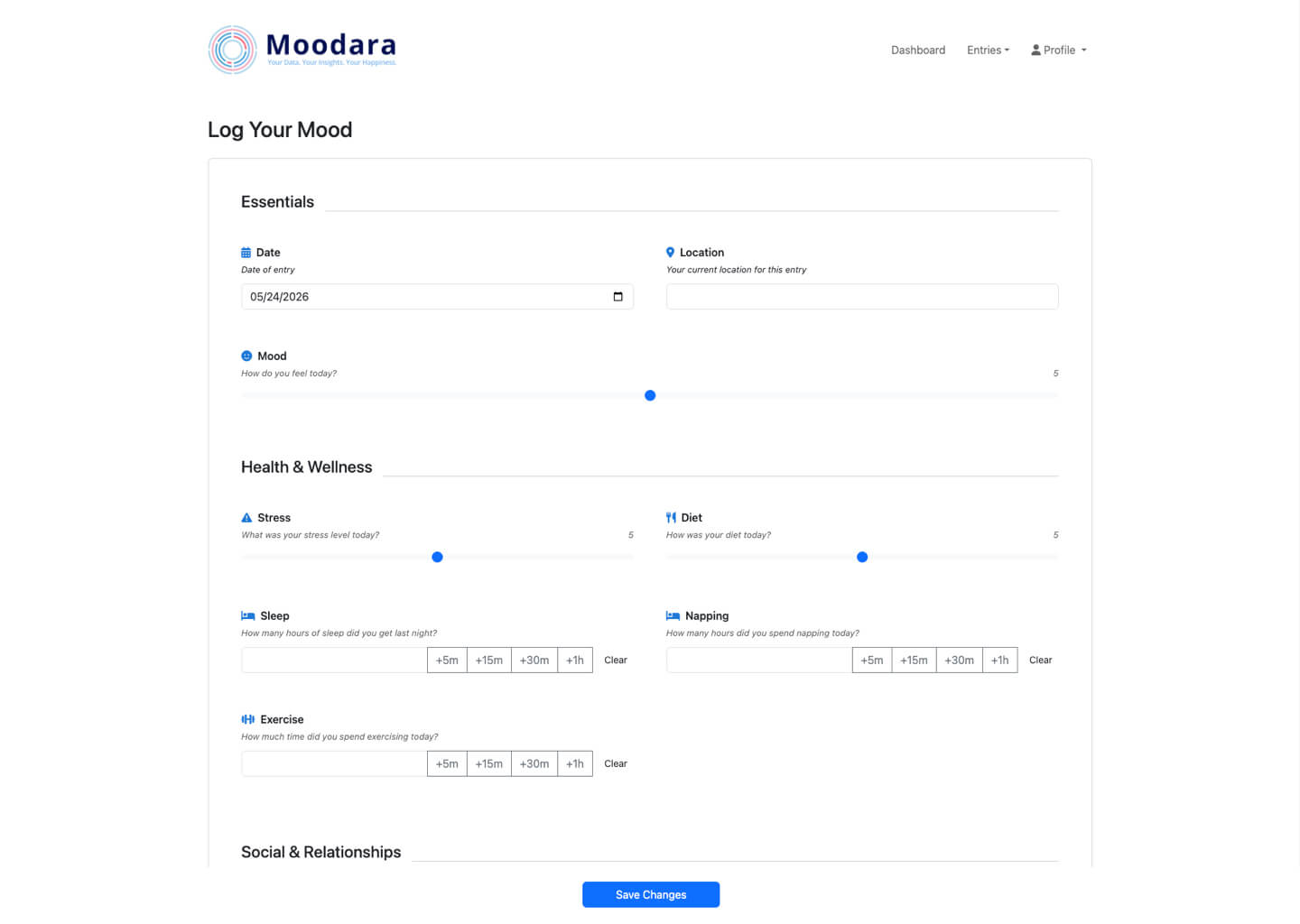
The idea began with a simple personal question: instead of relying only on general wellness advice, self-help books, and podcasts, what if someone could use their own data to better understand what actually makes them happier? The app was built around that premise, giving users a way to log daily mood entries, track customizable criteria, and compare mood against variables such as sleep, naps, activities, routines, and other personal factors.
At its core, the project is about turning subjective emotional experience into a personal data system for self-awareness.
Product Concept
The long-term vision for the app is to help people conduct their own small, private study of happiness.
Rather than assuming that the same habits, routines, or lifestyle changes work equally well for everyone, the app is designed around the idea that happiness is personal. Each user’s data belongs to them, and the primary value of the app is helping that person discover patterns in their own life.
A key principle of the concept is data ownership. Users should own their mood and happiness data, with sharing turned off by default. If they choose, users could optionally opt in to share anonymized or aggregated data to support broader community research or help improve the app, but the default experience is private and individual-first.
In short, the app provides a cloud-based experience that is private by default, useful to the individual first, and shareable only by choice.
Application Design
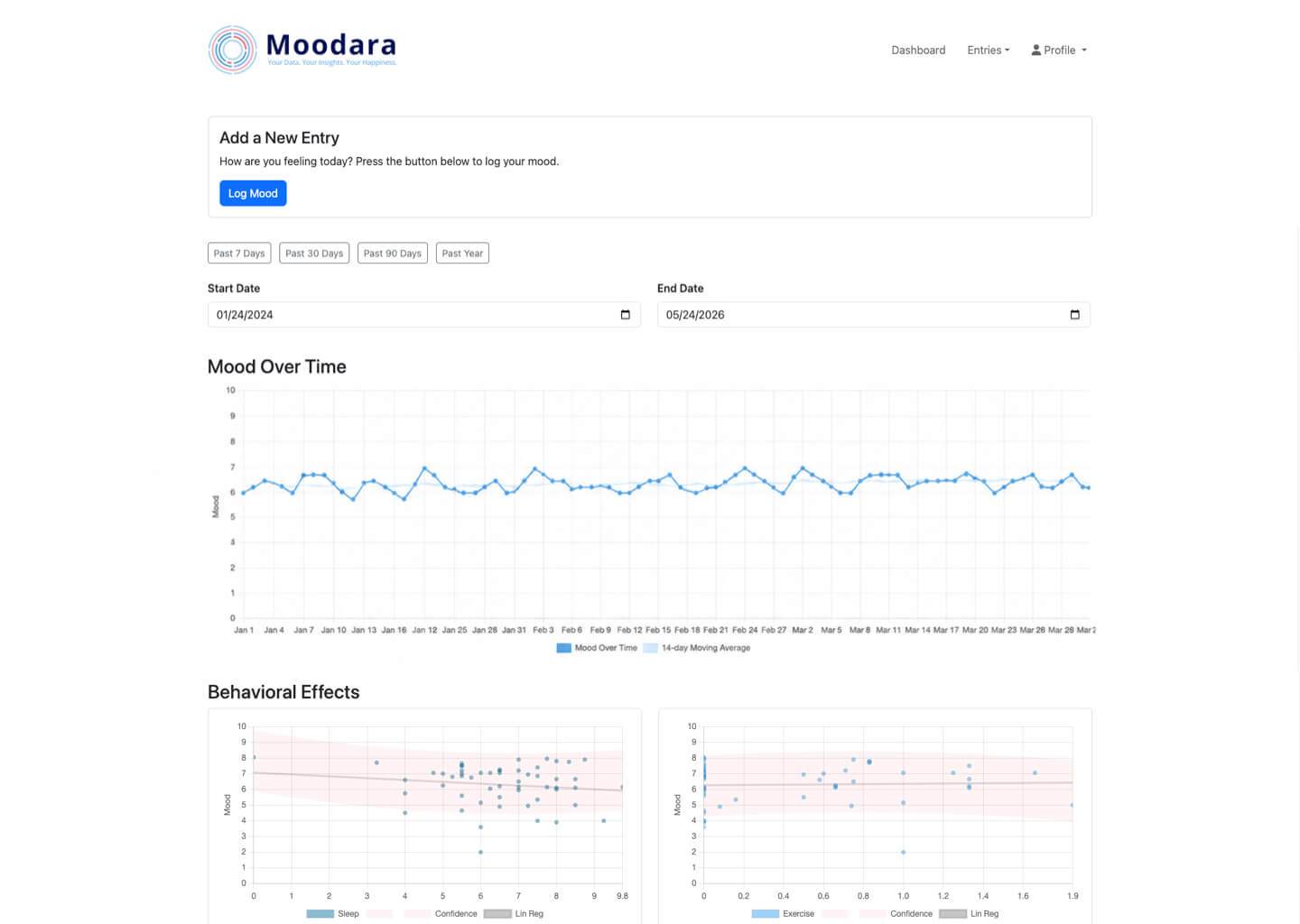
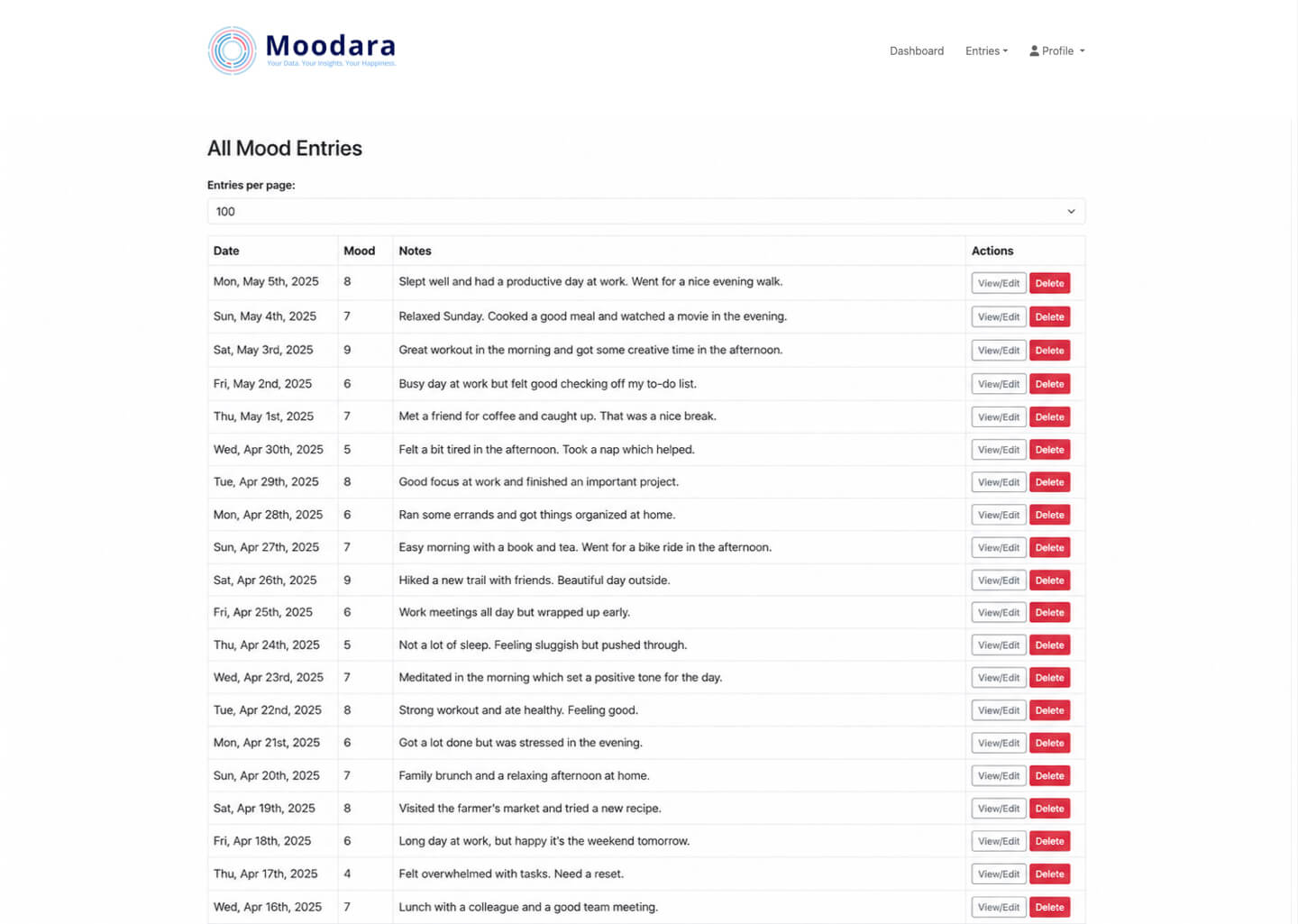
The app was designed as a secure, database-backed web application with a clean dashboard experience. Users can create mood entries, review historical logs, edit previous entries, and compare mood data against selected criteria over time.
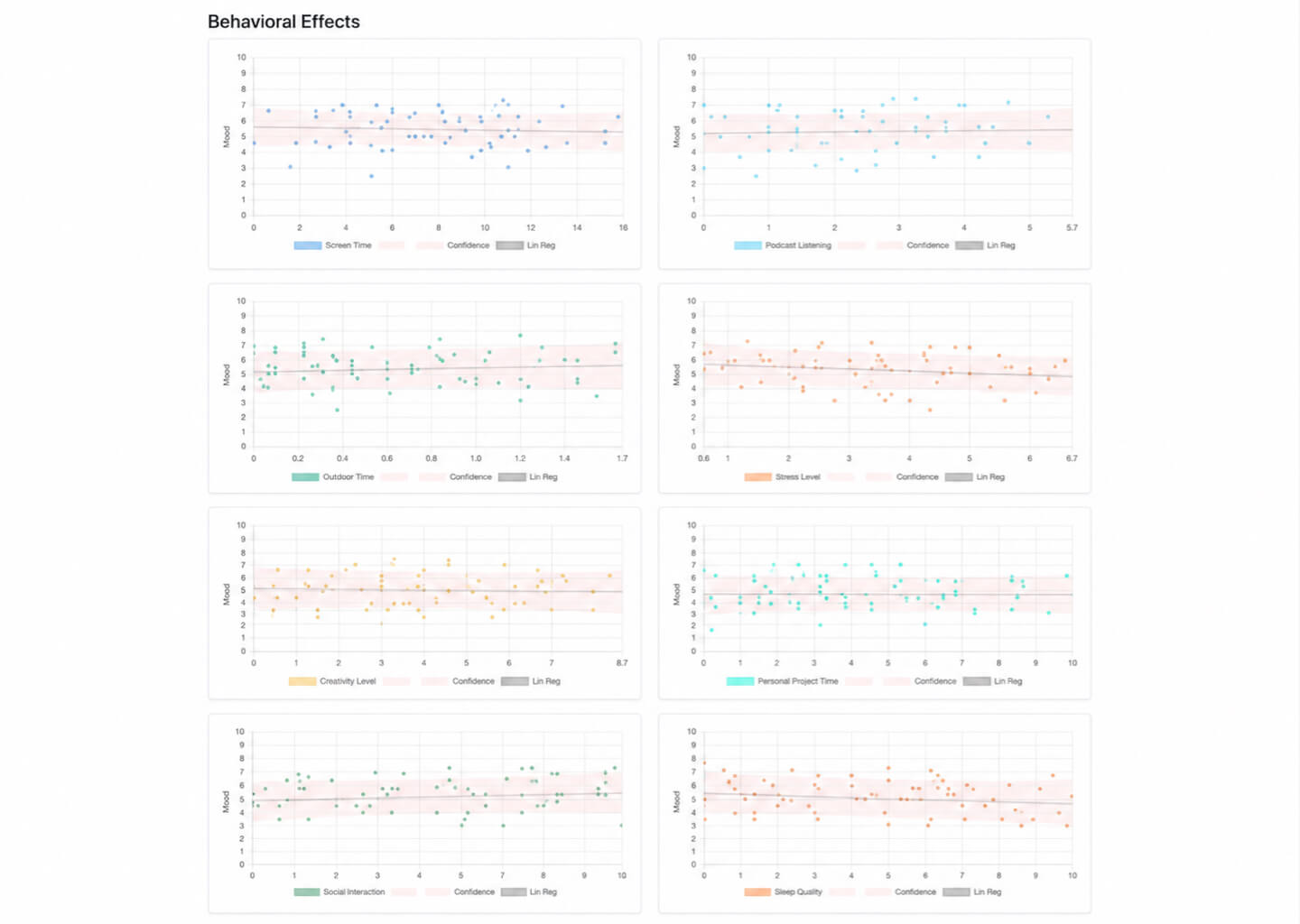
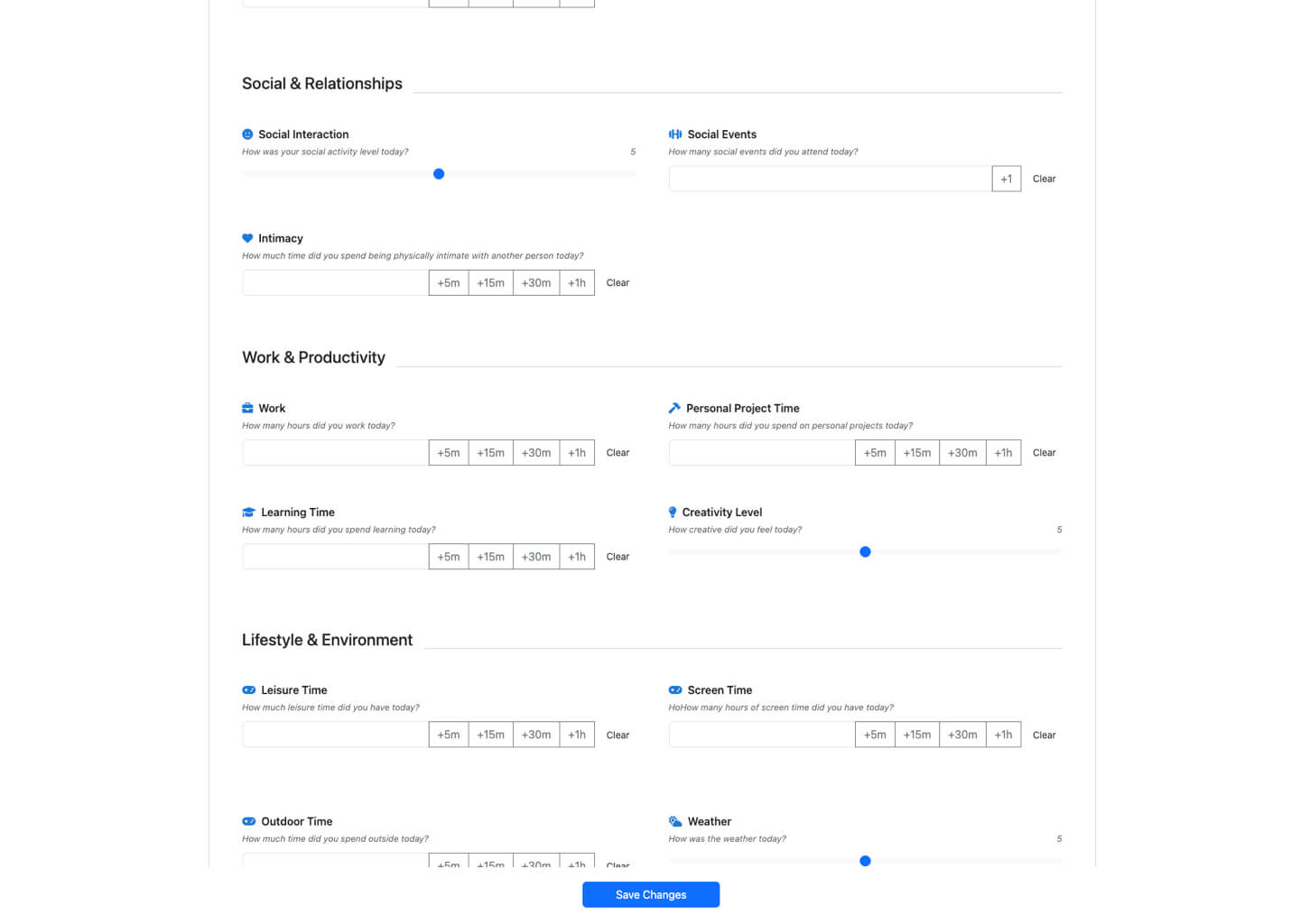
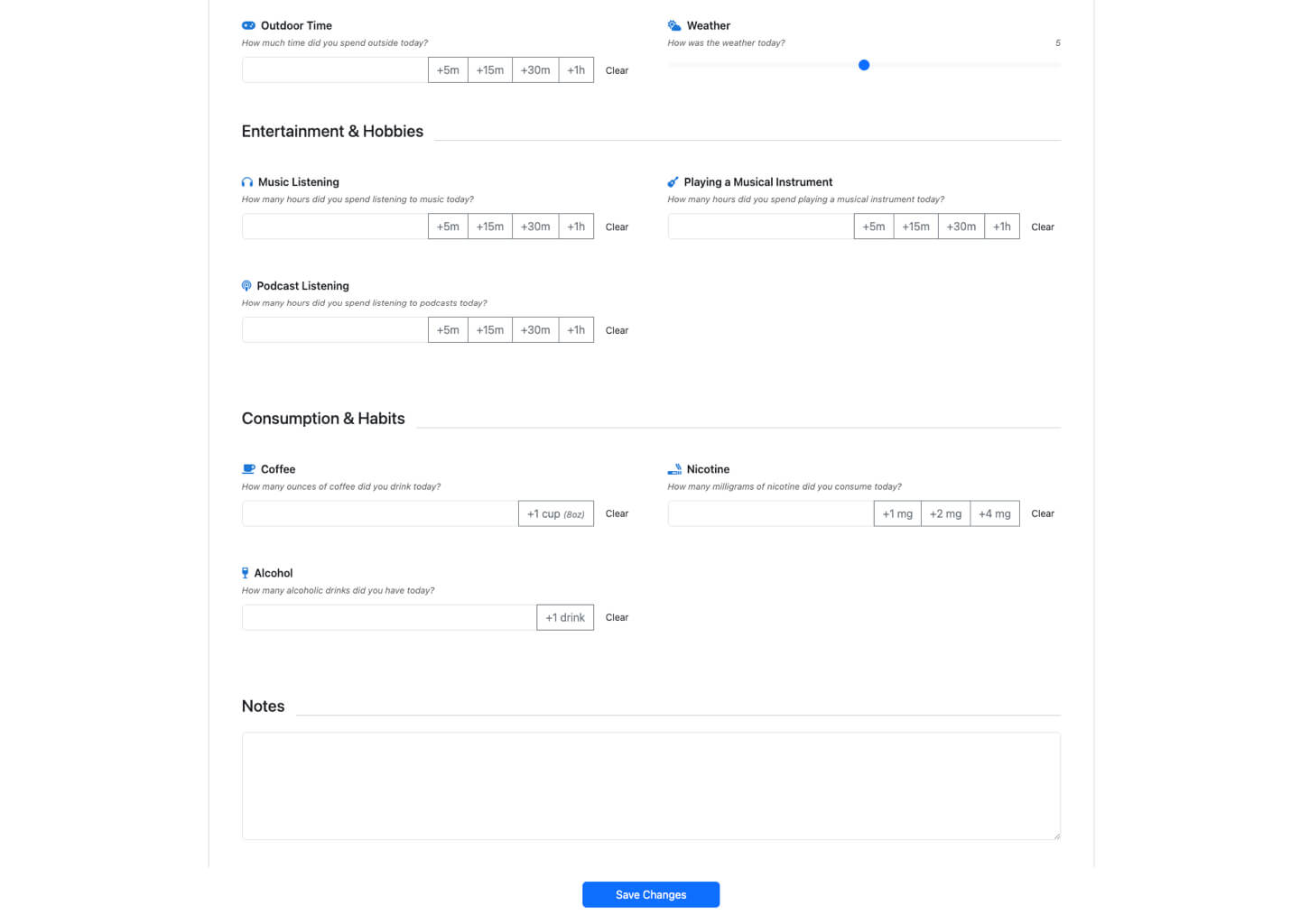
A major goal was flexibility. Rather than forcing every user to track the same factors, the app was designed to support customizable tracked criteria. This allows users to decide which parts of their life they want to measure, whether that includes sleep, exercise, social activity, creative work, nutrition, screen time, or other behaviors.
Features include secure user login, daily mood entry logging, editable mood records, customizable tracked criteria, dashboard views, data visualization, mood comparison charts, user settings and profile customization, and privacy-first data sharing controls.
Development Approach
I developed the project as a LAMP-based web application using PHP, MySQL, HTML, CSS, and JavaScript, with an emphasis on secure user accounts, structured data, and practical long-term maintainability.
The application uses a relational database structure to connect users, mood entries, tracked criteria, and related data points. This made it possible to support both daily logging and historical analysis while keeping the system flexible enough for future features.
The dashboard and visualization features were designed to help users move beyond raw logs and begin seeing patterns. One of the key goals was to allow mood to be plotted against different variables, including the ability to compare multiple factors through chart overlays and toggles.
Privacy and Data Ownership
Because mood data can be deeply personal, privacy was central to the product concept from the beginning.
The app was designed around a user-first data model. Users should be able to log, review, export, and control their own information. Any broader use of the data, such as anonymized research, community insights, or app improvement, would require explicit opt-in consent.
This principle helped shape the product strategy: a tool that helps users build useful insight from their own lived experience.
Long-Term Vision
The initial version was developed as a web application, with the possibility of later packaging the experience as a WebView-based hybrid mobile app for faster deployment. Longer term, the project could evolve into a full API-backed native application with richer mobile features, expanded visualizations, notifications, and deeper personal analytics.
Future goals
- Mobile app deployment
- Richer dashboard visualizations
- Trend and correlation analysis
- Optional anonymized community research
- Data export tools
- User-defined experiments
- Reminders and recurring check-ins
- Deeper customization of tracked criteria
The broader goal is to create a tool that helps people understand their happiness through their own data, while maintaining trust, transparency, and ownership at the center of the experience.
Overall, Moodara is an exploration of product design, full-stack development, data visualization, and privacy-first software thinking. It reflects my interest in building tools that are both technically functional and personally meaningful; systems that help people notice patterns, make decisions, and better understand their own lives.
Related Projects

ShotCue AI
2026
Structured AI Video Generation Tool
UX/UI Design, Web Development
Frequency
2026
Phaser Game
Game Development, Producer, Product Design, Sound Design, Visual Design
HourWise
2026
Time Tracking & Timesheet App
Product Design, UX/UI Design, Web Development
Accounting Hub
2025
Custom Finance Dashboard for Freelancers
Product Design, UX/UI Design, Web Development
Mad Moose Designs
2020
E-Commerce Website Design and Build
UX/UI Design, Web Development
Ryan’s World Website
2019
UX/UI Design and Development
UX/UI Design, Web Development

Jammed
2017
Retro 8-Bit-Style Mini-Game
Game Development, Music Composition, Producer, Sound Design, Visual Design